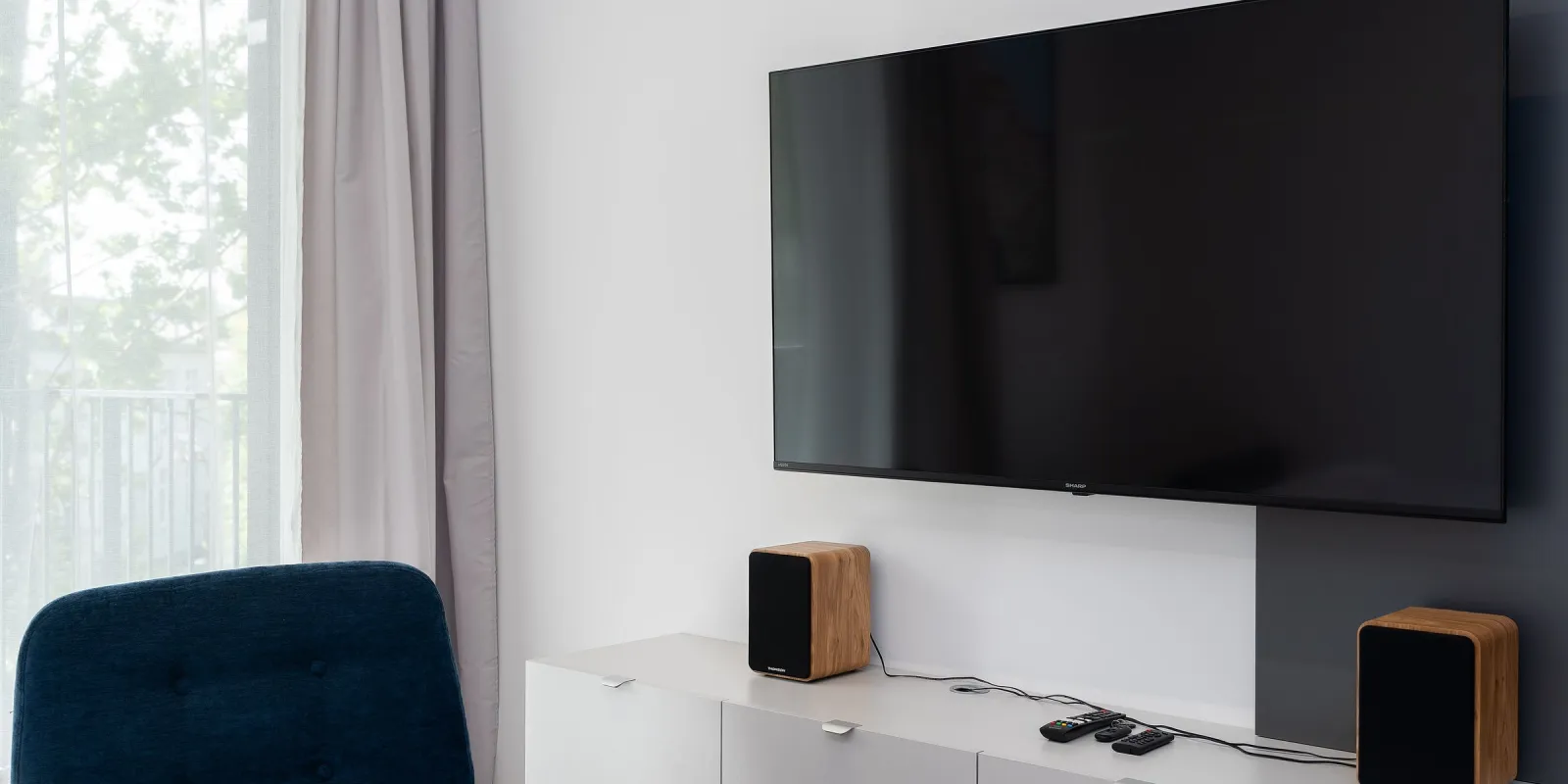
You do not need a big budget to get the main benefit of tower speakers: fuller sound from two boxes, without stands. At the entry level, the smartest buys are towers that are easy to place, easy to drive, and honest about their limits. Around the $500-per-pair tier, the Polk Audio Monitor XT70 and XT60 are the most sensible starting points on paper.
This guide covers six options, from slim TV-friendly towers to a big 3-way that stretches the budget. Our picks are based on manufacturer specifications, not hands-on listening, and we flag where those specs are incomplete or measured differently. Price tiers are described loosely because prices move often. Always check whether a listing is for one speaker or two.
How we researched this: This guide is based on manufacturer specifications, owner documentation, published third-party measurements and professional reviews. We have not hands-on tested these speakers unless a section says so. Our methodology
What “budget” means for tower speakers
Most budget towers are sold individually, so a listing that looks cheap may cover only one speaker. Throughout this guide we think in per-pair terms. Roughly, the entry tier sits below about $300 a pair, the core budget tier around $300–$500 a pair, and the “stretch” tier a bit above that.
Your speakers are also only part of the cost. You will need an amplifier or receiver, speaker wire and possibly a subwoofer later. Before you commit, run your numbers through the Speaker Budget Calculator, which splits a total budget sensibly between speakers and electronics.
Best overall budget pick: Polk Audio Monitor XT70
The XT70 gives you the most speaker for an entry-level budget on paper. It pairs two 6.5-inch woofers with two 8-inch passive radiators on the front baffle. Passive radiators are unpowered cones that reinforce bass without a port, so there is no rear port to chuff or boom when the speaker sits near a wall. Polk rates it at 35 Hz–40 kHz (no tolerance stated) and 89 dB at 1 watt/1 meter.
That combination suits a small-to-medium living room and an entry-level AV receiver. Polk gives no nominal impedance, saying only that it is compatible with 4- and 8-ohm outputs, which in practice means most receivers will be fine. It is sold individually. Check current price on Amazon.
Polk Audio Monitor XT70
The bigger Monitor XT adds a second woofer and two 8 in. front-mounted passive radiators for more bass, while staying easy to drive.
- Design2-way passive
- Drivers1 in. Terylene dome tweeter, 2x 6.5 in. bi-laminate paper woofers, 2x 8 in. passive bass radiators (front array)
- Frequency response35 Hz–40 kHz
- Sensitivity89 dB (1W)
- Impedance4–8 Ω amp compatible
- Amp power25-200 W per channel
- Dimensions40.4 × 9.25 × 12.5 in. (H×W×D)
- Weight35 lb
Advantages
- 35 Hz rated bass extension (tolerance not stated)
- Front passive radiators tolerate near-wall placement
- 89 dB sensitivity suits entry-level receivers
Limitations
- Entry-level cabinet finish
- No published nominal impedance
- Sold individually
Best cheap tower: Polk Audio Monitor XT60
If the XT70 is a little too large or too expensive, the XT60 is the obvious step down. It has one 6.5-inch woofer plus two 6.5-inch passive radiators, in a 7.5-inch-wide, 20 lb cabinet that is easy to fit beside a TV or in a small room. Polk rates bass to 38 Hz, again without a tolerance.
The weak spot is efficiency: 86 dB at 1 watt, which is lower than the XT70. Pair it with a receiver that has a bit of headroom rather than the smallest amp you can find. Our Polk Monitor XT60 review covers it in more depth. View on Amazon.
Polk Audio Monitor XT60
A slim, light entry-level tower that uses passive bass radiators instead of a port — an easy, affordable first step up from bookshelf speakers.
- Design2-way passive
- Drivers1 in. Terylene dome tweeter, 1x 6.5 in. bi-laminate paper woofer, 2x 6.5 in. passive bass radiators
- Frequency response38 Hz–40 kHz
- Sensitivity86 dB (1W)
- Impedance4–8 Ω amp compatible
- Amp power25-200 W per channel
- Dimensions36.4 × 7.5 × 9.09 in. (H×W×D)
- Weight20 lb
Advantages
- Slim 7.5 in. wide cabinet is easy to fit
- Passive radiators instead of a port ease near-wall placement
- Wide 25–200 W amplifier range
Limitations
- 86 dB (1W) sensitivity needs some amplifier headroom
- No published nominal impedance
- Sold individually — buy two
Best slim TV tower: Yamaha NS-F210
The NS-F210 is best understood as a stylish TV speaker rather than a full-range tower. It is very slim and light (16.1 lb), but its two woofers are only 3-1/8 inches across, and Yamaha rates bass down to 50 Hz. That is fine for dialogue and music in a small room. It will not deliver deep bass on its own.
Plan it as part of a 2.1 system: two NS-F210s plus a subwoofer, crossed over at around 80 Hz. Sensitivity is a modest 86 dB at 2.83V with a 6-ohm load, so it is happiest at moderate volumes. It is sold individually. See available options.
Yamaha NS-F210
A very slim, light tower with tiny 3-1/8 in. woofers — best treated as a stylish TV speaker paired with a subwoofer.
- Design2-way passive
- Drivers7/8 in. balanced dome tweeter, 2x 3-1/8 in. cone woofers
- Frequency response50 Hz–45 kHz
- Sensitivity86 dB (2.83V)
- Impedance6 Ω nominal
- Dimensions41.3 × 9.3 × 9.3 in. (H×W×D)
- Weight16.1 lb
- Sold asSingle speaker
Advantages
- Very slim and light (16 lb)
- Neat for TV setups
- 6 Ω nominal load
Limitations
- Bass limited to 50 Hz — a subwoofer is advised
- Small drivers limit volume
- 86 dB sensitivity
Light 3-way option: Sony SS-CS3
The SS-CS3 is a long-running budget 3-way with a soft-dome tweeter, a small “super tweeter” for extended treble, and two 5.1-inch woofers. On paper it is easy to drive (88 dB at 2.83V, 6 ohms) and light at around 25 lb, which suits small rooms and modest stereo amps.
The big caveat is availability. Sony launched it in 2014, Sony Japan’s own store no longer carries it, and we could not verify current US availability. If you find it, confirm the listing is new stock from an authorized seller and check whether the price is for one speaker or two. Small woofers also mean modest bass, so a subwoofer is a likely future addition. Check current availability.
Sony SS-CS3
A long-running budget 3-way tower with a super tweeter. Availability in the US varies — check the listing is new stock.
- Design3-way passive
- Drivers25 mm (1 in.) soft-dome tweeter, 19 mm (0.75 in.) super tweeter, 2x 130 mm (5.1 in.) cone woofers
- Frequency response45 Hz–50 kHz
- Sensitivity88 dB (2.83V)
- Impedance6 Ω nominal
- Dimensions36.3 × 9.1 × 10.2 in. (H×W×D)
- Weight25.4 lb
- Sold asCheck listing
Advantages
- Light, narrow 3-way design
- 88 dB (2.83V) sensitivity
- Super tweeter extends treble
Limitations
- Launched in 2014; US availability uncertain
- Small 5.1 in. woofers limit bass
- Port location not documented
Step-up if the budget stretches: Klipsch R-600F
If you can stretch past the strict budget tier, the R-600F brings Klipsch’s horn-loaded tweeter and very high efficiency. Klipsch rates it at 96 dB, but measured “in-room,” which reads several dB higher than the anechoic figures most brands quote. Even so, it is clearly an efficient speaker that plays loud on small amplifiers. Its 8-ohm load is easy for any receiver, and Klipsch quotes 38 Hz–21 kHz at ±3 dB, a tighter tolerance than most budget rivals publish.
Watch out for the rear-firing port, which needs some space from the wall. Klipsch does not state whether it is sold singly or in pairs, so check the listing. Horn-loaded treble is lively, and not every listener prefers it. Our Polk vs Klipsch comparison explains the difference in design approach. Explore on Amazon.
Klipsch Reference R-600F
Klipsch’s horn-loaded tweeter and very high efficiency make this tower play loud on small amplifiers — a lively choice for movies.
- Design2-way passive, horn tweeter
- Drivers1 in. aluminum LTS tweeter on 90x90 Tractrix horn, 2x 6.5 in. spun-copper TCP woofers
- Frequency response38 Hz–21 kHz +/- 3 dB
- Sensitivity96 dB (2.83V, in-room)
- Impedance8 Ω nominal
- Dimensions40 × 9.4 × 15.2 in. (H×W×D)
- Weight41 lb
- Sold asCheck listing
Advantages
- Very high efficiency (96 dB, in-room rating)
- Response quoted ±3 dB (38 Hz–21 kHz)
- 8 Ω — easy for any receiver
Limitations
- Rear ports need space from the wall
- Klipsch sensitivity uses an in-room method — not directly comparable
- Horn presentation is not to every taste
Most speaker for the money: Fluance Signature HFF
The Fluance HFF is the outlier here. It is a tall 3-way with a dedicated 5-inch midrange and two 8-inch woofers, sold as a pair. That pair pricing is why it appears in a budget conversation at all. It usually sits above the strict entry tier, but it can compare well against two individually priced towers in the next tier up.
On paper it offers 89 dB sensitivity and an 8-ohm load, so it is easy to drive. The catches are size and placement. Each speaker is 47.3 inches tall and 62.4 lb, and the rear port needs wall clearance. Fluance does not publish a tolerance for its 35 Hz–20 kHz response. Outriggers and isolation spikes are included, so protect hardwood floors (see our accessories guide). Check price on Amazon.
Fluance Signature HFF
A tall 3-way tower with dual 8 in. woofers sold as a pair — lots of cabinet and driver area for the money.
- Design3-way
- Drivers1 in. neodymium silk dome tweeter, 5 in. woven glass fiber midrange, 2x 8 in. polypropylene woofers
- Frequency response35 Hz–20 kHz
- Sensitivity89 dB (2.83V)
- Impedance8 Ω nominal
- Dimensions47.3 × 10.9 × 15.4 in. (H×W×D)
- Weight62.4 lb
- Sold asPair
Advantages
- Sold as a pair
- Dual 8 in. woofers plus dedicated midrange
- Outriggers and isolation spikes included
Limitations
- Tall and heavy (62 lb each)
- Rear port needs wall clearance
- Response tolerance not stated
Budget tower speakers compared
Manufacturer specs only. Note that the Polk Monitor XT figures are at 1 watt and Klipsch’s are in-room, so sensitivity is not directly comparable across every column.
| Product | Design | Drivers | Frequency response | Sensitivity | Impedance | Dimensions | Sold as | Best for | Amazon |
|---|---|---|---|---|---|---|---|---|---|
| Polk Audio Monitor XT70 | 2-way passive | 1 in. Terylene dome tweeter, 2x 6.5 in. bi-laminate paper woofers, 2x 8 in. passive bass radiators (front array) | 35 Hz–40 kHz | 89 dB (1W) | 4–8 Ω amp compatible | 40.4 × 9.25 × 12.5 in. (H×W×D) | Single speaker | Best Under $500 | View |
| Polk Audio Monitor XT60 | 2-way passive | 1 in. Terylene dome tweeter, 1x 6.5 in. bi-laminate paper woofer, 2x 6.5 in. passive bass radiators | 38 Hz–40 kHz | 86 dB (1W) | 4–8 Ω amp compatible | 36.4 × 7.5 × 9.09 in. (H×W×D) | Single speaker | Best Budget | View |
| Yamaha NS-F210 | 2-way passive | 7/8 in. balanced dome tweeter, 2x 3-1/8 in. cone woofers | 50 Hz–45 kHz | 86 dB (2.83V) | 6 Ω nominal | 41.3 × 9.3 × 9.3 in. (H×W×D) | Single speaker | Slim TV tower (add a sub) | View |
| Sony SS-CS3 | 3-way passive | 25 mm (1 in.) soft-dome tweeter, 19 mm (0.75 in.) super tweeter, 2x 130 mm (5.1 in.) cone woofers | 45 Hz–50 kHz | 88 dB (2.83V) | 6 Ω nominal | 36.3 × 9.1 × 10.2 in. (H×W×D) | Check listing | Budget (check availability) | View |
| Klipsch Reference R-600F | 2-way passive, horn tweeter | 1 in. aluminum LTS tweeter on 90x90 Tractrix horn, 2x 6.5 in. spun-copper TCP woofers | 38 Hz–21 kHz +/- 3 dB | 96 dB (2.83V, in-room) | 8 Ω nominal | 40 × 9.4 × 15.2 in. (H×W×D) | Check listing | High-efficiency value | View |
| Fluance Signature HFF | 3-way | 1 in. neodymium silk dome tweeter, 5 in. woven glass fiber midrange, 2x 8 in. polypropylene woofers | 35 Hz–20 kHz | 89 dB (2.83V) | 8 Ω nominal | 47.3 × 10.9 × 15.4 in. (H×W×D) | Pair | Big 3-way value | View |
Specifications are manufacturer-published figures. Measurement methods differ between brands, so treat small differences with caution.
What you give up at this price
Budget towers are good value, but it helps to know the trade-offs up front:
- Looser specs. Most budget models do not publish a tolerance on their frequency response. A “35 Hz” figure without ±3 dB or −6 dB attached is a rough guide, not a measurement you can compare.
- Simpler cabinets and finishes. Expect vinyl wraps rather than real wood veneer, and less internal bracing than premium towers.
- Smaller or fewer drivers. Slim towers like the NS-F210 and SS-CS3 trade bass depth for size. A subwoofer fills that gap.
- Less complete documentation. Polk, for example, does not publish a nominal impedance for the Monitor XT series.
What you generally do not give up is the basic advantage of a tower: more cone area and cabinet volume than a bookshelf speaker of similar cost. Our tower vs bookshelf guide explains when each makes sense.
Budgeting for the amplifier
A common mistake is spending everything on speakers and pairing them with an underpowered amp. A practical approach is to set aside a meaningful share of your total budget for the amplifier or receiver.
- Movies and TV: an entry-level AV receiver gives you HDMI, room correction and a subwoofer output.
- Music only: a stereo integrated amp is simpler. If it lacks a subwoofer output, choose a sub with speaker-level inputs.
- Lower-sensitivity speakers (around 86 dB) benefit from more headroom. Every 3 dB less sensitivity needs about twice the power for the same volume.
Not sure your amp is a match? Try the Amplifier Compatibility Checker or read what amplifier do tower speakers need?
Plan for a subwoofer later
Budget towers can sound full in small rooms, but deep bass is where they compromise most. You do not need to buy a sub on day one. Just make sure your amp or receiver has a subwoofer output, or that any future sub has speaker-level inputs, so you can add one later. The Yamaha NS-F210 in particular is designed with a sub in mind. Read do tower speakers need a subwoofer? for guidance on when it is worth it.
Which budget tower suits your room?
If you are still torn, match the speaker to your space and setup rather than to the spec sheet alone:
| Your situation | Start with | Why |
|---|---|---|
| Small room, speakers near the wall | Polk Monitor XT60 | Slim cabinet; passive radiators instead of a port |
| Small-to-medium living room, mixed use | Polk Monitor XT70 | More woofer area; front passive radiators |
| TV setup where looks and size matter most | Yamaha NS-F210 + subwoofer | Very slim; the sub handles bass below 50 Hz |
| Low-power amp, movie-heavy | Klipsch R-600F | Very high efficiency and an 8-ohm load |
| Medium-to-large room, space to spare | Fluance Signature HFF | 3-way with dual 8 in. woofers, sold as a pair |
The Speaker Match Finder can make this call for you from a few questions about your room, amplifier and budget.
Picks from earlier versions of this guide
This guide first appeared in 2021 as “Top 10 Best Budget Tower Speakers”. Here’s what happened to the models it featured:
| Earlier pick | Status in 2026 | Current alternative |
|---|---|---|
| Klipsch R-26FA | Replaced by newer Reference models | Klipsch R-600F |
| Polk Audio Monitor 70 Series II | Replaced | Polk Monitor XT70 |
| Sony SS-CS3 | Still listed above; US availability varies | — |
| Dayton Audio T652-AIR | Check availability | Polk Monitor XT60 |
| Rockville TM80B and similar | Party/PA-oriented towers | See passive vs powered |
| Klipsch R-610F | Replaced by newer Reference models | Klipsch R-600F / R-800F |
Looking for more? See our complete budget tower speaker buying guide and floor-standing speakers under $500.
Frequently asked questions
Are cheap tower speakers worth it?
Yes, if you choose sensibly. Entry-level towers like the Polk Monitor XT70 give you more cone area and cabinet volume than similarly priced bookshelf speakers, plus no need for stands. Expect simpler finishes and less deep bass than premium models, and plan to add a subwoofer later if you watch a lot of movies.
Are budget tower speakers sold as a pair?
Usually not. Polk Monitor XT and Yamaha NS-F210 towers are sold individually, so you need to buy two. The Fluance Signature HFF is sold as a pair. Klipsch and Sony do not clearly state it on the spec pages we checked, so read each listing carefully before comparing prices.
What amplifier do I need for budget tower speakers?
Most budget towers are easy loads, so an entry-level AV receiver or stereo integrated amp is fine. Check the speaker’s recommended power range and choose an amp with some headroom, especially for lower-sensitivity models around 86 dB. If you might add a subwoofer later, make sure the amp has a sub output.
Should I buy budget towers or bookshelf speakers and a subwoofer?
For the same total budget, good bookshelf speakers plus a subwoofer can produce deeper bass than budget towers alone. Towers are simpler, with two boxes, no stands and less setup. If floor space is tight, or you prefer a tidy look, towers make sense. If bass depth is the priority, a 2.1 system is worth considering.
Next steps
Have a little more room in the budget? Compare these picks with our best tower speakers under $1,000, or see every category winner in our main guide to the best tower speakers. Short on space? Our small-room tower guide focuses on slim cabinets and near-wall placement.
Leave a Reply