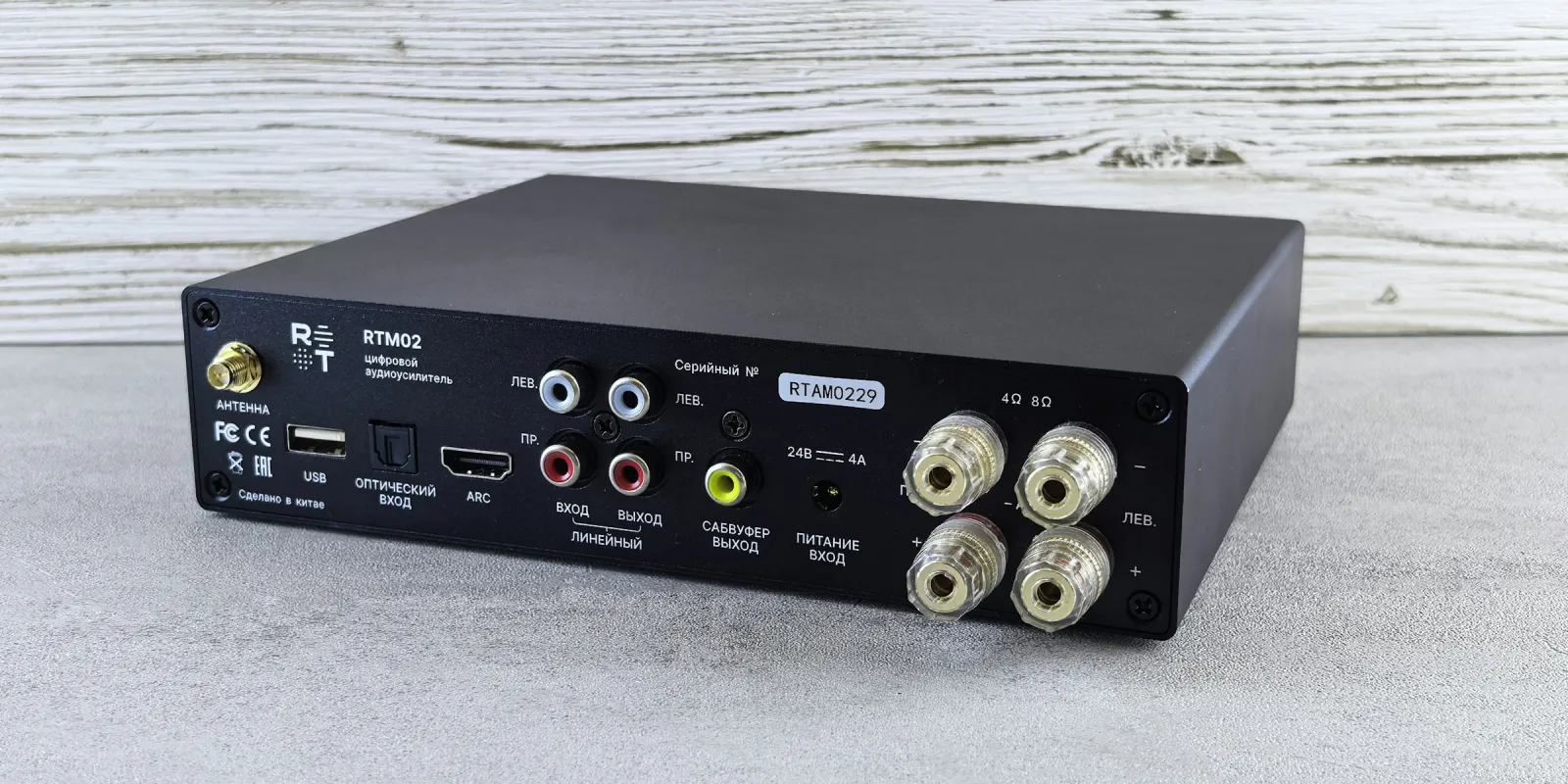
Almost every tower speaker you will find in a store is passive: it has no amplifier inside and needs a separate amp or AV receiver to drive it. Powered (or active) speakers build the amplification into the cabinet, so you plug them into the wall and feed them a signal.
Powered speakers are common in bookshelf and desktop sizes. Fully powered towers exist, but they are rare in the mainstream market. In between sits a third type, the hybrid tower, which has a powered bass section and passive midrange and treble.
This guide explains how each works, what each costs to own, and how to decide which route suits your room and habits.
How we researched this: This guide is based on manufacturer specifications, owner documentation, published third-party measurements and professional reviews. We have not hands-on tested these speakers unless a section says so. Our methodology
How passive tower speakers work
A passive speaker contains drivers (tweeter, woofers and sometimes a midrange) plus a passive crossover that splits the signal between them. It has binding posts on the back and no power cord. All the amplification comes from outside: a stereo integrated amplifier, a stereo receiver, or a multichannel AV receiver.
Every tower in our catalogue is passive or, in one case, hybrid. For example, the Polk Monitor XT60, Klipsch R-800F, ELAC Debut 3.0 DF63 and KEF Q7 Meta all need an external amp. The amp has to suit the speaker’s sensitivity and impedance. A 98 dB (in-room) Klipsch is far easier to drive than a speaker with a 3.2-ohm minimum impedance, like the KEF per its spec sheet.
Our what amplifier do you need for tower speakers guide explains how to match power and impedance in detail.
How powered (active) speakers work
In a powered speaker, the amplifier sits inside the cabinet. You connect a power cord and a source, and that is it. Many powered speakers also include inputs like optical, USB, Bluetooth or Wi-Fi streaming, and some have a subwoofer output.
The term “active” is sometimes used more strictly. In a truly active design, the crossover works on the low-level signal before amplification, and each driver gets its own amplifier channel. This lets the designer tailor the amplifier and electronic filtering to each driver. Some products marketed as “powered” simply put one amp in front of a conventional passive crossover. Both are convenient; the fully active approach gives the designer more control.
Why powered towers are rare
Fully powered floorstanding speakers are uncommon in mainstream retail. Building amplifiers into a tall cabinet adds heat, weight and cost, and many tower buyers already own a receiver or want one for home theater. Powered designs are far more common in bookshelf, studio-monitor and soundbar formats. We have not listed specific powered tower models here because we have not verified current models against manufacturer data.
Hybrid towers: a powered bass section
A hybrid tower combines both approaches. The midrange and treble drivers are passive and run from your amplifier or receiver. The bass section has its own built-in amplifier and needs AC power from a wall outlet.
The Definitive Technology Dymension DM70 is an example from our catalogue. Per Definitive Technology’s specs, each tower includes a 10-inch powered subwoofer with two 10-inch passive radiators, plus bipolar front-and-rear tweeters and midrange drivers that your amp drives. It has a bass level control (listed as +12/−15 dB) and a rear-tweeter level switch check current availability.
The appeal is deep bass without a separate subwoofer box, and less work for your amplifier, since it no longer has to drive the bass. The trade-offs: you need a power outlet near each speaker, the towers are large (Definitive lists 47.4 inches tall with outriggers and 74.1 lb), and the bipolar design needs space behind the speaker. They are also well above entry-level pricing and are sold individually.
A bipolar tower with a built-in powered 10 in. subwoofer — big bass without a separate sub, at a premium price.
Pros and cons at a glance
| Passive towers | Powered towers | Hybrid towers | |
|---|---|---|---|
| Needs external amp | Yes | No | Yes, for mids and treble |
| Needs AC power at speaker | No | Yes | Yes |
| Choice of models | Very wide | Very limited | Limited |
| Upgrade amp separately | Yes | No | Partly |
| Home theater with AV receiver | Natural fit | Depends on inputs | Natural fit |
| Built-in streaming | Via your amp/receiver | Sometimes built in | Via your amp/receiver |
| Amp/speaker matching | Your job | Done by the maker | Mostly your job |
| Long-term repairs | Speakers rarely fail; amp is replaceable | An amp fault takes the speaker out | Bass amp fault affects that tower |
| Cable runs | Speaker wire only | Power plus signal (and sometimes a link cable) | Speaker wire plus power |
Cost of ownership
Comparing sticker prices is misleading, because a passive tower is only half a system. To budget fairly, add up everything you need to make sound.
- Passive: speakers (often priced per speaker, so double it) plus an amplifier or receiver, plus speaker wire. If you already own a capable amp or AV receiver, the cost of adding passive towers drops sharply.
- Powered: one purchase covers speakers and amplification, and sometimes streaming. You may save on an amp, but you are paying for that amp inside the price.
- Hybrid: you need an amp or receiver as well as the speakers, and you are paying for built-in subwoofer amplification. This can still work out well if it replaces a separate subwoofer.
Think about the long term too. Passive speakers have no electronics beyond the crossover, so a good pair can outlast several amplifiers. Electronics age faster, and a powered speaker’s amplifier, inputs and streaming platform may become dated or unsupported long before its drivers wear out. Our speaker budget calculator helps total a full system.
Upgradeability
This is passive speakers’ strongest argument. With separate parts, you can:
- Upgrade the amplifier later for more power or better features, without replacing the speakers.
- Move from a stereo amp to an AV receiver when you add surround speakers.
- Add a subwoofer through the receiver’s sub output.
- Keep the speakers when an HDMI or streaming standard changes and only replace the electronics.
Powered speakers lock the amplifier and speaker together. If a new HDMI standard arrives, or the built-in app stops getting updates, your only upgrade path may be a whole new pair. Before buying any amp for passive towers, run the numbers through our amplifier compatibility checker to avoid a mismatch.
Streaming convenience
Powered speakers often win on simplicity. Many include Bluetooth or Wi-Fi streaming, so a phone becomes the whole source. There is no amp to choose, no speaker wire to strip, and fewer remotes.
Passive systems can be just as convenient; the streaming moves to the amplifier instead. Many current AV receivers and stereo amps include network streaming or Bluetooth. For example, our research notes list HEOS on the Denon AVR-S770H and Bluetooth on the Denon PMA-600NE. You can also add a separate streamer to almost any amp.
So the convenience gap is smaller than it looks, as long as you choose the amplifier with streaming in mind.
Home theater considerations
Home theater is where passive towers are hard to beat. An AV receiver handles HDMI switching, surround decoding, room correction and bass management, and powers all the passive speakers in the system. Passive towers plug straight in as front left and right.
Powered speakers can work in a surround system only if they accept the right input, which usually means a pre-out from an AV processor or receiver. Hybrid towers like the DM70 connect to the receiver’s speaker outputs like any passive tower, with the added bass section powered separately. See our home theater tower guide for models that suit this role.
When powered bookshelf speakers plus a sub is better
If the main reason you are looking at powered towers is to avoid buying an amplifier, consider a powered bookshelf pair plus a subwoofer instead. It often makes more sense when:
- You want a simple music system for streaming, a TV or a turntable with a built-in phono preamp, and do not need surround sound.
- Your room is small or medium, where a large tower may overload the bass anyway.
- You want real choice. Powered bookshelf speakers are widely available; powered towers are not.
- You want deep bass you can place freely. A powered subwoofer can sit where bass sounds best, separate from the main speakers.
Check that the powered speakers have a subwoofer output or some way to integrate a sub. Our tower vs bookshelf speakers comparison covers the room-size and footprint trade-offs in more detail, and do tower speakers need a subwoofer? explains bass integration.
Which should you choose?
- Choose passive towers if you own or plan to buy an AV receiver or stereo amp, want the widest choice of models, or plan to grow into surround sound.
- Choose a hybrid tower if you want deep bass without a separate sub, have outlets near both speakers, and have the space and budget.
- Choose powered speakers if simplicity and built-in streaming matter most and you do not need surround. In practice that usually means powered bookshelf speakers plus a sub.
For our full shortlist of passive towers, see the best tower speakers guide.
Frequently asked questions
Do tower speakers need an amplifier?
Most do. The vast majority of tower speakers are passive and need an external amplifier, stereo receiver or AV receiver. A hybrid tower with a built-in subwoofer still needs an external amp for its midrange and treble, plus AC power for the bass section. Only fully powered towers, which are rare, work without an amp.
Can I connect passive speakers directly to a TV?
No. A TV’s headphone or optical output does not provide enough power to drive passive speakers. You need an amplifier or AV receiver between the TV and the speakers. Many receivers connect to a TV over HDMI eARC, which carries sound from the TV’s apps and inputs to the receiver.
Are powered speakers better than passive speakers?
Neither is better across the board. Powered speakers let the designer match the amplifier to the drivers and save you buying an amp. Passive speakers offer more choice, are easier to upgrade and fit naturally into home theater systems. The right choice depends on your room, budget and whether you want surround sound.
Do hybrid tower speakers need to be plugged in?
Yes. In a hybrid tower such as the Definitive Technology Dymension DM70, the built-in subwoofer section has its own amplifier and needs AC power. The midrange and tweeters are powered by your receiver through normal speaker wire. Plan for an outlet near each speaker.
Can I add a subwoofer to passive tower speakers?
Yes. The easiest way is through an AV receiver or amplifier with a subwoofer (pre-out) output. Set the towers to “small” or “large” in the receiver’s speaker setup and choose a crossover, with 80 Hz being a common starting point. A powered subwoofer has its own amplifier, so it only needs a line-level signal.
Next steps
If you are going passive, start with what amplifier you need for tower speakers, then check any pairing with the amplifier compatibility checker. To learn how efficiency affects amp choice, read speaker sensitivity explained.


Leave a Reply