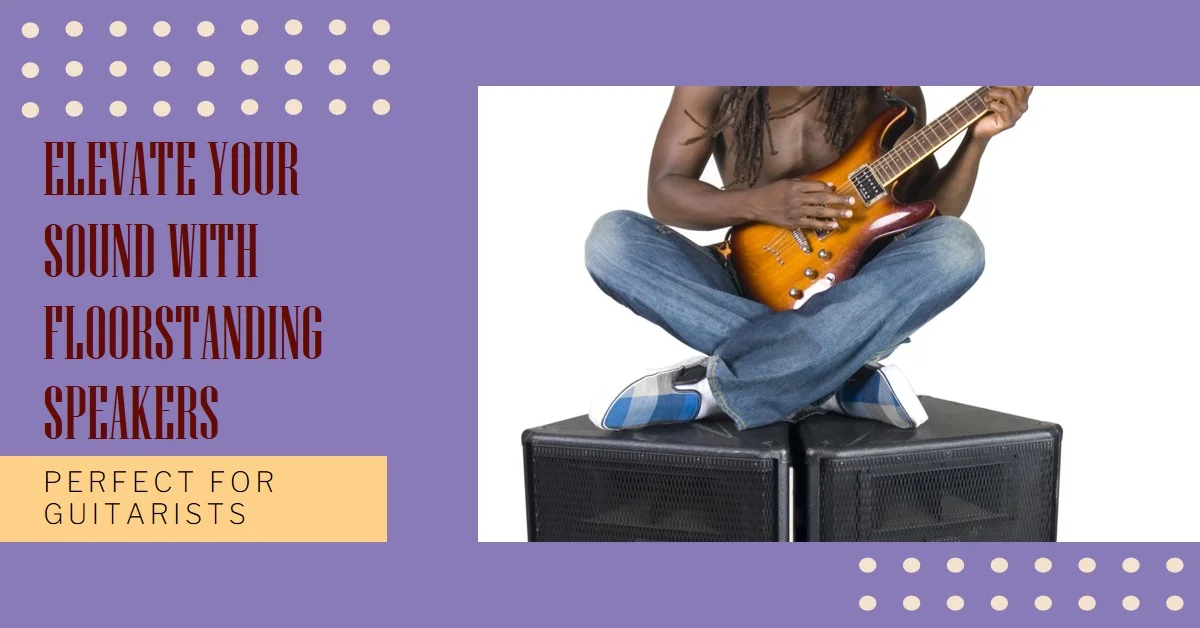
Guitarists often ask whether hi-fi floorstanding speakers make good guitar speakers. The short answer: they’re excellent for listening back to recordings and for practicing along with music, and they can work with digital modelers — but they’re not a substitute for a guitar amplifier, and plugging a guitar straight in won’t work.
Our original version of this article listed ten hi-fi speakers (several of them actually bookshelf models) as “guitar speakers” without explaining these limits. We’ve rewritten it to help you choose the right tool.
Three ways guitarists use speakers
1. Guitar amplifiers and cabinets
Traditional guitar speakers are deliberately not full-range: they roll off high frequencies, which is part of the classic electric guitar tone. If you play through a tube or solid-state guitar amp, use a guitar cab.
2. FRFR speakers for modelers
Modern digital modelers (amp-and-cab simulators) are designed for full-range speakers. FRFR powered speakers are built for this job — durable, loud and stage-friendly.
3. Hi-fi speakers for practice and playback
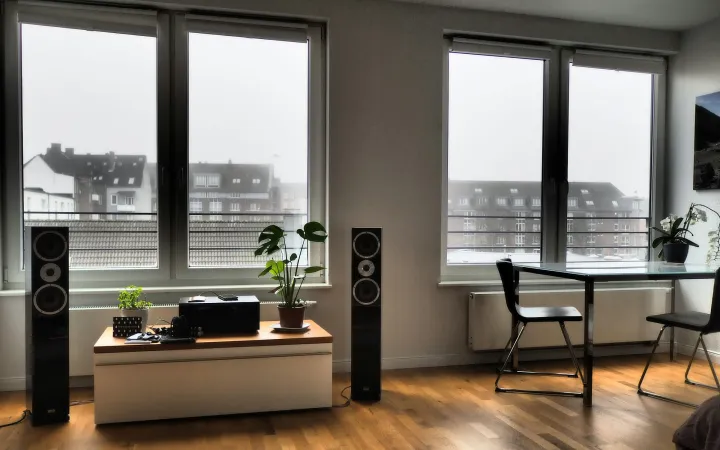
Hi-fi towers fed by a modeler or audio interface via a stereo amplifier give an accurate, room-filling sound for home practice, recording playback and jamming along with tracks.
Using hi-fi towers safely with guitar
- Connect your modeler/interface line output to an amplifier (or receiver) — never the guitar directly.
- Use the modeler’s cab simulation; raw amp tones without cab sims sound harsh.
- Watch volume: sustained high-gain tones at high levels can damage tweeters.
- Choose efficient, robust towers if you play loud.
Good hi-fi towers for practice and playback
Klipsch Reference R-600F
Klipsch’s horn-loaded tweeter and very high efficiency make this tower play loud on small amplifiers — a lively choice for movies.
- Very high efficiency (96 dB, in-room rating)
- Response quoted ±3 dB (38 Hz–21 kHz)
- 8 Ω — easy for any receiver
- Design2-way passive, horn tweeter
- Drivers1 in. aluminum LTS tweeter on 90x90 Tractrix horn, 2x 6.5 in. spun-copper TCP woofers
- Sensitivity96 dB (2.83V, in-room)
- Impedance8 Ω nominal
JBL Stage 280F
Dual 8 in. woofers, a waveguide tweeter and 91 dB sensitivity give the Stage 280F big-room output for movies at a mid-range price.
- Dual 8 in. woofers; 33 Hz (±6 dB)
- 91 dB sensitivity is easy to drive
- Atmos module binding posts
- Design2.5-way passive
- Drivers1 in. anodized aluminum tweeter in HDI waveguide, 2x 8 in. polycellulose ribbed-cone woofers
- Sensitivity91 dB (2.83V)
- Impedance6 Ω nominal
Wharfedale Diamond 12.3
A slim 7.1 in. wide 2.5-way tower with an easy 8-ohm-compatible load — a natural fit for smaller rooms and modest stereo amplifiers.
- Slim cabinet suits smaller rooms
- Easy load: 8 Ω compatible, 5 Ω minimum
- Response quoted ±3 dB (45 Hz–20 kHz)
- Design2.5-way passive
- Drivers1 in. (25 mm) textile dome tweeter, 5 in. (130 mm) mid/bass, 5 in. (130 mm) bass (Klarity PP cones)
- Sensitivity89 dB (2.83V)
- Impedance8 Ω nominal (5.0 Ω min)
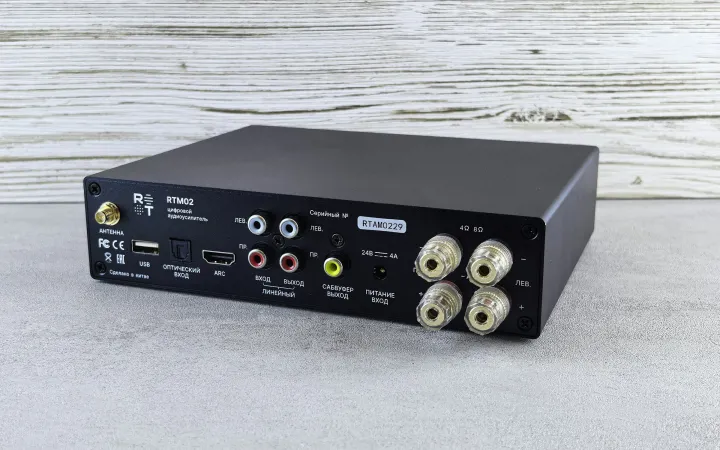
A stereo integrated amplifier with a phono stage, Bluetooth and digital inputs — a sensible music-first partner for tower speakers.
What happened to our original list?
Our 2024 list included the Focal Chorus 726, Q Acoustics 3050i, ELAC Debut 2.0 F6.2, Triangle Borea BR08, Wharfedale Elysian 4, Monitor Audio Bronze 50, DALI Oberon 5, Klipsch RP-600M, Paradigm Premier 800F and PSB Imagine X2T. Several are bookshelf speakers, and many have been replaced (for example, the Q Acoustics 3050i by the 3050c, the ELAC F6.2 by the Debut 3.0 DF63, and the DALI Oberon 5 by the SONIK 5). All are hi-fi speakers best suited to playback rather than as guitar amplifiers.
Choosing hi-fi towers for practice and playback
- Efficiency: higher-sensitivity speakers reach practice volumes with less amplifier power, leaving headroom.
- Robust tweeters: horn-loaded tweeters (as on Klipsch models) tend to handle demanding material well, but no tweeter likes clipping.
- Bass extension: towers reproduce the low end of backing tracks and bass guitar better than small speakers.
- Room fit: slim towers suit home studios and bedrooms.
Example signal chains
- Modeler practice: guitar → modeler (with cab sim) → line out → integrated amplifier → hi-fi towers.
- Recording playback: computer → audio interface → amplifier → towers (or studio monitors).
- Traditional amp: guitar → guitar amp → guitar cabinet (no hi-fi speakers needed).
Frequently asked questions
Can I plug my guitar into hi-fi speakers?
Not directly. You need a guitar amp, a modeler or an audio interface, and an amplifier for passive speakers.
What's a FRFR speaker?
A full-range, flat-response powered speaker designed to reproduce modeled guitar tones accurately, especially on stage.
Will guitar damage my hi-fi speakers?
It can at high volume, especially distorted tones without cab simulation. Keep levels sensible and use cab sims.
Related guides: What amplifier do I need? · Best tower speakers for music
Leave a Reply