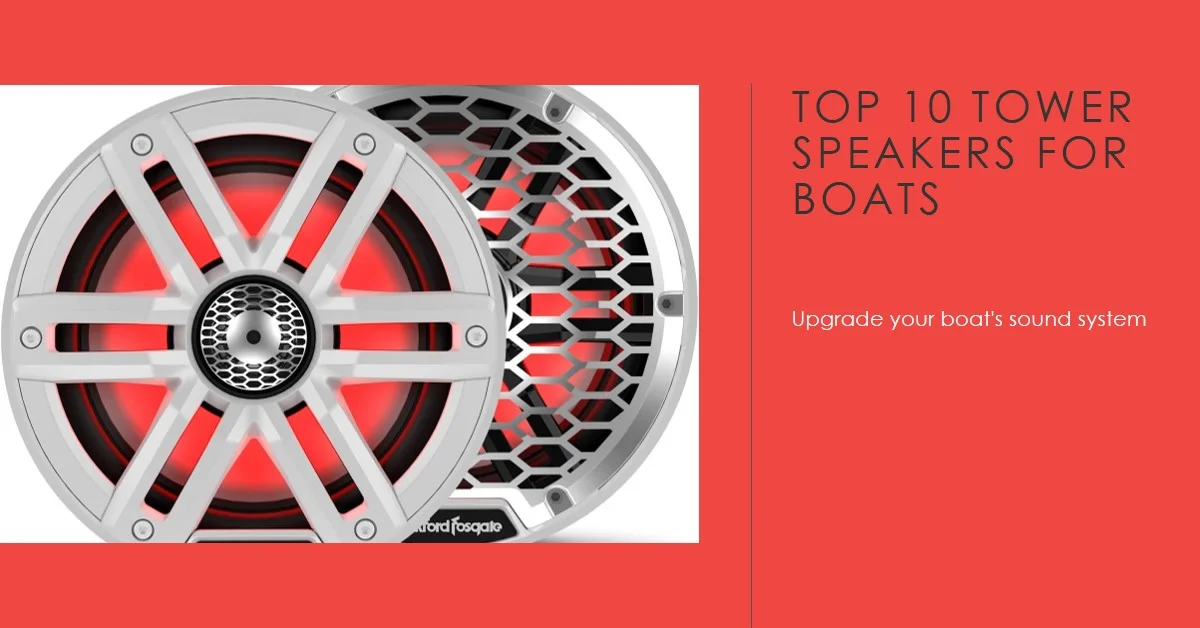
Boat tower speakers mount high on a wakeboard tower (or on a T-top or bimini frame) and project sound across the deck and behind the boat. Choosing well means balancing output, durability, mounting and amplification.
We’ve updated this guide to focus on the buying criteria and to clarify our original list, which mixed true tower pods with flush-mount coaxial marine speakers and quoted peak wattage figures that aren’t comparable between brands.
Key factors
Power handling (RMS, not peak)
Marine speakers often advertise peak wattage. RMS (continuous) power handling is the useful figure for matching an amplifier. Under-powering tower speakers with a head unit alone rarely gives enough volume on the water.
Marine durability
Look for UV-stabilized enclosures, marine-grade hardware, sealed or coated connections and corrosion-resistant grilles. Water-resistance ratings (IP codes) help compare models.
Mounting and fit
Tower pods use clamps sized for specific tube diameters; check your tower before ordering. Swivel mounts let you aim sound at riders behind the boat.
Number of speakers and placement
Two tower pods facing aft is common for wakeboarding; add in-boat coaxials for passengers. Balance and fade controls help.
Lighting
RGB LED rings are popular but add wiring; check controller compatibility.
Models from our original list
These were featured in our 2024 version. Availability and specifications change — verify each model on the manufacturer’s site. Note that some are flush-mount coaxial marine speakers rather than tower pods.
- Rockford Fosgate marine speakers — explore options
- DS18 marine tower speakers — explore options
- JBL marine speakers — explore options
- Kicker marine (LED) speakers — explore options
- BOSS Audio marine speakers — explore options
- Polk Audio UltraMarine (DB+) — explore options
- Clarion, Kenwood, Skar Audio and NOAM marine speakers — compare on each brand’s site
Installation tips
- Use marine-grade tinned wire and sealed connectors.
- Route wiring through the tower where possible and protect entry points.
- Fuse amplifier power wiring correctly and follow the boat’s electrical system guidelines.
- Consider professional installation for tower work.
Typical boat audio layouts
- Small runabouts: a pair of in-boat coaxials plus one pair of tower pods.
- Wake boats: multiple coaxials in the cockpit and bow, two or four tower pods, a subwoofer and a multi-channel marine amplifier.
- Pontoons: coaxials around the seating plus pods on the bimini frame.
Maintenance through the season
- Rinse speakers and clamps with fresh water after saltwater trips.
- Check clamp tightness — vibration loosens hardware.
- Inspect wiring at the tower joints for chafing.
- Cover or remove pods during winter storage.
Frequently asked questions
Do boat tower speakers need an amplifier?
For useful volume on the water, yes — a marine amplifier matched to the speakers’ RMS rating.
What size tower speakers do I need?
Larger drivers (often 6.5–10 inches) and horn tweeters project further; boat size and use (cruising vs wakeboarding) guide the choice.
Are home tower speakers suitable for boats?
No. Home speakers aren’t built for moisture, salt or UV. Use marine-rated speakers.
Related guides: Best marine tower speakers · JL Audio vs Wet Sounds · Component vs coaxial speakers
Leave a Reply