
Should you buy floor-standing (tower) speakers or bookshelf speakers? Both can sound excellent, and neither is “better” in every situation. The right choice depends on your budget, how you’ll use the system, the sound you like and the space you have.
This guide keeps the practical question-based approach of our original article and adds clearer guidance on each answer. For a detailed, spec-driven comparison, see our in-depth tower speakers vs bookshelf speakers guide.
The basic difference
Bookshelf speakers are compact two-way (sometimes three-way) designs with a tweeter and a small mid/bass driver. They sit on stands, shelves or furniture. Their small cabinets limit deep bass and maximum volume.
Floor-standing speakers are tall cabinets that stand on the floor, usually with several drivers — a tweeter, one or more woofers and sometimes a dedicated midrange. More cabinet volume and cone area mean deeper bass and more output, without a separate stand.
A third route is a satellite + subwoofer system, where small speakers handle mids and treble and a subwoofer handles bass. See floor-standing speakers vs satellites.
Question 1: How much do you want to spend?
At the same price, a bookshelf pair can put more of the budget into driver and crossover quality, while a tower pair puts more into cabinet and cone area. Don’t forget stands (for bookshelves) and amplification (for both). Our budget calculator helps.
Question 2: Home theater or two-channel music?
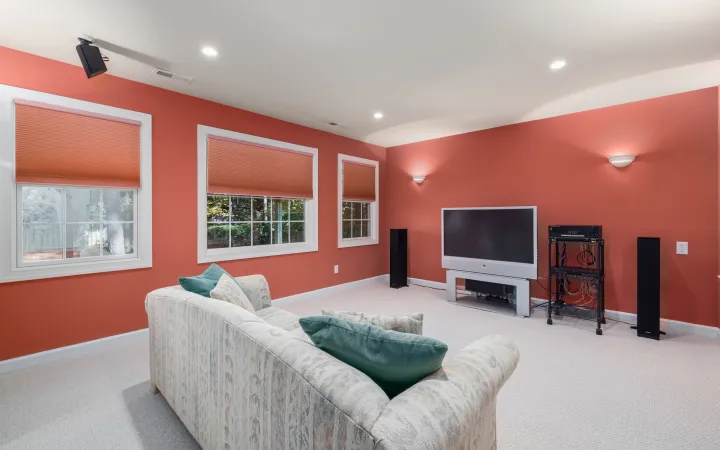
For a home theater without a subwoofer, towers usually make more sense as front left/right speakers because they handle bass and dynamics better. With a subwoofer, quality bookshelf speakers can work just as well. For a dedicated two-channel music system, both work — towers save you buying a sub.
Question 3: Clarity or big, loud bass?
If you want impact for hip-hop, EDM or movies at volume, towers (or a sub) are the way to go. If you mostly listen at moderate levels and value detail and imaging, a good bookshelf pair can be outstanding — and easier to position precisely.
Question 4: How big is your room?
In small rooms, towers can overload the bass. In medium and large rooms, towers fill the space more easily. Our room planner helps you size your space.
Question 5: Do you want an upgrade path?
Bookshelf + subwoofer systems are easy to upgrade piece by piece. Towers are a more complete package from day one.
Quick comparison
| Floor-standing | Bookshelf | |
|---|---|---|
| Bass without a sub | Fuller, deeper | Limited |
| Space needed | Floor space | Stand or shelf (stands use floor space too) |
| Best room size | Medium–large | Small–medium |
| Extra costs | Amplifier | Amplifier + stands (+ sub) |
| Upgrade path | Add a sub later | Add a sub, upgrade stands |
Example towers to consider
The bigger Monitor XT adds a second woofer and two 8 in. front-mounted passive radiators for more bass, while staying easy to drive.
A slim 7.1 in. wide 2.5-way tower with an easy 8-ohm-compatible load — a natural fit for smaller rooms and modest stereo amplifiers.
Looking at bookshelf speakers instead? See our best bookshelf speakers under $200.
Frequently asked questions
Do floor-standing speakers sound better than bookshelf speakers?
Not automatically. Towers usually produce deeper bass and more volume, while bookshelf speakers of similar quality can image as well or better. Room size, placement and amplification matter as much as speaker type.
Can bookshelf speakers replace towers in a home theater?
Yes, especially with a subwoofer. Many home theaters use bookshelf speakers for the fronts and let a sub handle bass.
Are towers worth it in a small room?
Sometimes. Slim towers can work well, but large towers may make bass boomy in small rooms. See best tower speakers for small rooms.
Related guides: Are floor-standing speakers better? · Are tower speakers worth it? · Bookshelf speakers vs soundbars
Leave a Reply