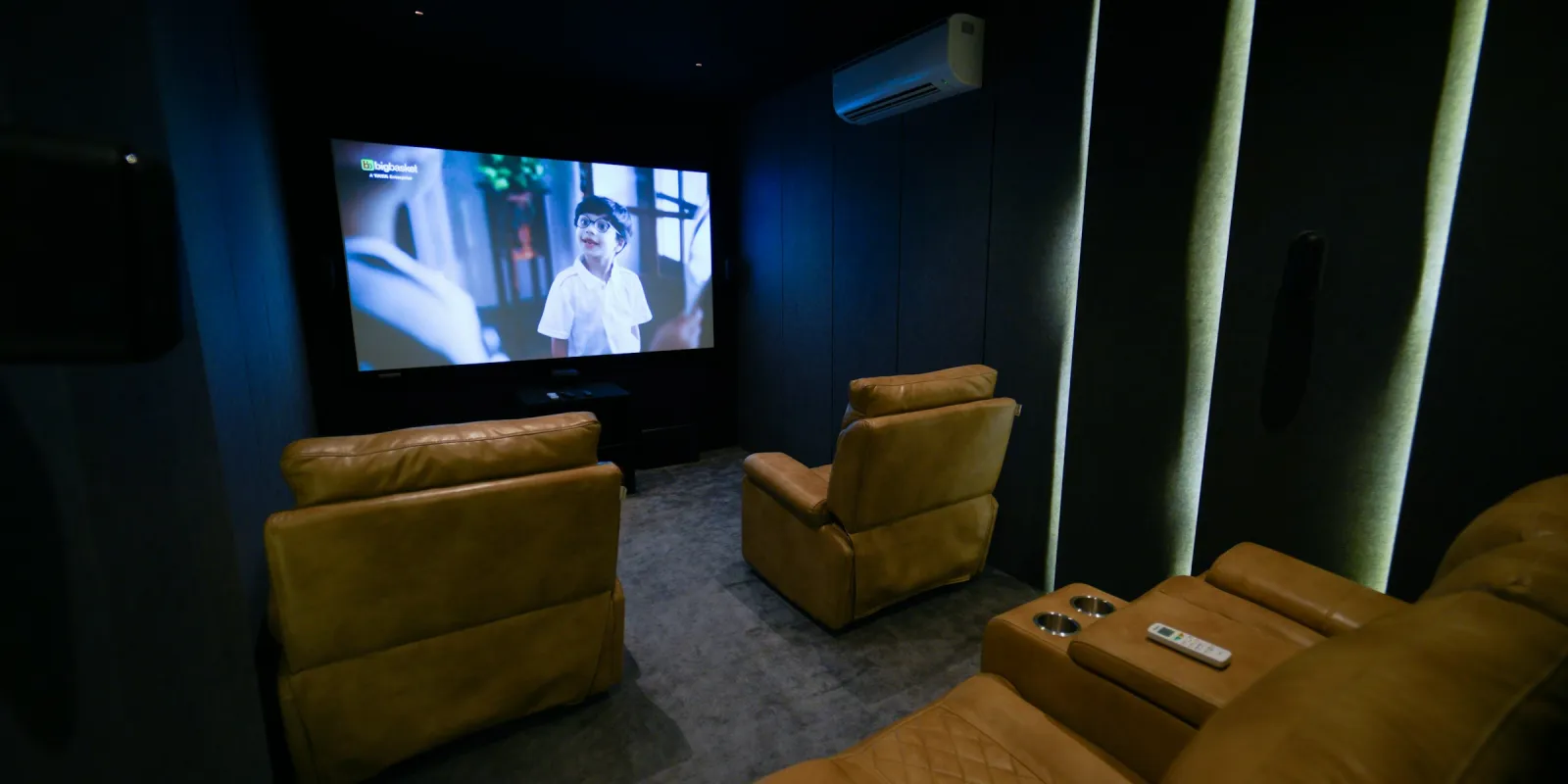
Even good tower speakers rarely reproduce the deepest bass at real volume — the rumble of a movie explosion, a pipe organ’s pedal notes or the low synth line in electronic music. A subwoofer handles that bottom octave, takes strain off your towers and amplifier, and lets you place bass where the room responds best.
This guide covers subwoofers that pair well with tower speakers, from an affordable ported sub to a compact sealed design, and explains how to choose, place and set one up.
How we researched this: This guide is based on manufacturer specifications, owner documentation, published third-party measurements and professional reviews. We have not hands-on tested these speakers unless a section says so. Our methodology
Our subwoofer picks
Best budget subwoofer: Polk Monitor XT12
A 12-inch ported subwoofer with LFE and speaker-level inputs. Speaker-level inputs mean it can connect to a stereo amplifier that has no dedicated subwoofer output — useful for music-first tower systems. Polk doesn’t publish an amplifier wattage for this model, so compare it on driver size, inputs and features.
Polk Audio Monitor XT12 Subwoofer
A 12 in. ported subwoofer with LFE and speaker-level inputs — a simple way to add deep bass to an entry-level system.
- Driver12 in. bi-laminate paper
- DesignPorted (bass reflex)
- Low-pass80–160 Hz
- InputsLFE RCA, speaker-level
- Dimensions16 × 16.4 × 17.9 in. (W×H×D)
- Weight39 lb
Advantages
- Speaker-level inputs work with stereo amps lacking a sub output
- Matches Monitor XT towers
- 12 in. driver
Limitations
- Amplifier power not published by Polk
- Ported cabinet is fairly large
Best mid-range subwoofer: Klipsch R-121SW
A 12-inch front-firing woofer with a 200 W continuous (400 W peak) amplifier and a rated 28–120 Hz range. It’s a natural partner for Klipsch Reference towers such as the R-600F and R-800F, and a solid all-round choice for movies.
Klipsch Reference R-121SW Subwoofer
A 12 in. front-firing subwoofer with a 200 W continuous amplifier and 28–120 Hz rated range.
- Driver12 in. front-firing
- Amplifier200 W continuous / 400 W peak
- Frequency response28–120 Hz
- DesignPorted (rear)
- Dimensions16.6 × 16 × 19.7 in. (H×W×D)
- Weight35 lb
Advantages
- Published amplifier rating
- Pairs naturally with Klipsch Reference towers
Limitations
- Rear port needs some space
- Large cabinet
Best compact sealed subwoofer: SVS SB-1000 Pro
A sealed 12-inch subwoofer in a compact cabinet with a 325 W RMS amplifier and a rated 20–270 Hz range. Sealed subs typically trade a little maximum output for tighter, more controlled bass and a smaller footprint. The SVS app adds EQ and settings control from your phone.
SVS SB-1000 Pro Subwoofer
A compact sealed 12 in. subwoofer with a 325 W RMS amplifier and app control — tidy and tight-sounding in smaller rooms.
- Driver12 in.
- Amplifier325 W RMS (820+ W peak)
- Frequency response20–270 Hz
- DesignSealed
- Dimensions13.5 × 13 × 14.76 in.
- Weight26 lb
Advantages
- Compact sealed cabinet
- App-based EQ and settings
- 325 W RMS amplifier
Limitations
- Sealed design trades some maximum output for size
- Premium price for its size
| Product | Driver | Design | Amplifier | Frequency response | Dimensions | Weight | Best for | Amazon |
|---|---|---|---|---|---|---|---|---|
| Polk Audio Monitor XT12 Subwoofer | 12 in. bi-laminate paper | Ported (bass reflex) | — | — | 16 × 16.4 × 17.9 in. (W×H×D) | 39 lb | Budget subwoofer | View |
| Klipsch Reference R-121SW Subwoofer | 12 in. front-firing | Ported (rear) | 200 W continuous / 400 W peak | 28–120 Hz | 16.6 × 16 × 19.7 in. (H×W×D) | 35 lb | Mid-range subwoofer | View |
| SVS SB-1000 Pro Subwoofer | 12 in. | Sealed | 325 W RMS (820+ W peak) | 20–270 Hz | 13.5 × 13 × 14.76 in. | 26 lb | Compact sealed subwoofer | View |
Specifications are manufacturer-published figures. Measurement methods differ between brands, so treat small differences with caution.
Do you need a subwoofer with tower speakers?
Not always. Many towers reach into the 30s Hz, which covers most music. A sub becomes worthwhile when you watch movies (the LFE channel is designed for one), play bass-heavy music loud, have a large room, or own slim towers with small woofers. Read the full explanation in do tower speakers need a subwoofer?
How to choose a subwoofer
Ported vs sealed
- Ported (bass reflex) subs use a port to boost output in the low bass — more volume per dollar, but larger cabinets.
- Sealed subs are usually more compact with tighter, more controlled bass and gentler roll-off — easier to integrate in small rooms.
Size and room
A 10–12-inch sub suits most living rooms. Larger rooms and dedicated home theaters benefit from bigger drivers, more amplifier power — or two subwoofers, which smooth out bass across more seats.
Inputs
- LFE input — the standard connection from an AV receiver’s subwoofer output.
- Speaker-level (high-level) inputs — for stereo amplifiers without a sub output.
- Wireless options exist on some models via adapters.
Matching your towers
Staying within the same brand isn’t required, but a sub designed to integrate with your towers’ series can make setup easier. What matters most is crossover setup and placement.
Setting up your subwoofer
- Placement: try the “subwoofer crawl” — put the sub at your listening seat, play bass-heavy music, crawl around the front of the room and note where bass sounds most even. Put the sub there.
- Crossover: set your receiver’s speakers to “Small” and the crossover to 80 Hz as a starting point (the common THX reference). With large towers, 60–80 Hz often works well.
- Phase: start at 0°, then try 180° — choose the setting that sounds fuller at the crossover region.
- Level: run your receiver’s room correction, then fine-tune by ear. The sub should blend in, not draw attention to itself.
Frequently asked questions
What size subwoofer do I need for tower speakers?
A 10- or 12-inch subwoofer suits most living rooms. In large rooms or home theaters, consider a larger or more powerful sub, or two subs for smoother bass.
Can I add a subwoofer to a stereo amplifier?
Yes. If your amplifier has no sub output, choose a subwoofer with speaker-level (high-level) inputs, such as the Polk Monitor XT12, or use the amplifier’s pre-out if it has one.
What crossover should I use with tower speakers?
80 Hz is a reliable starting point. Towers with strong bass can work with 60–80 Hz; adjust by ear or with your receiver’s room correction.
Is a sealed or ported subwoofer better?
Neither is universally better. Ported subs give more output for the money; sealed subs are more compact and controlled. Small rooms often favor sealed designs.
Related guides: Do tower speakers need a subwoofer? · Best tower speakers for home theater · Best tower speaker accessories · Best tower speakers
Leave a Reply