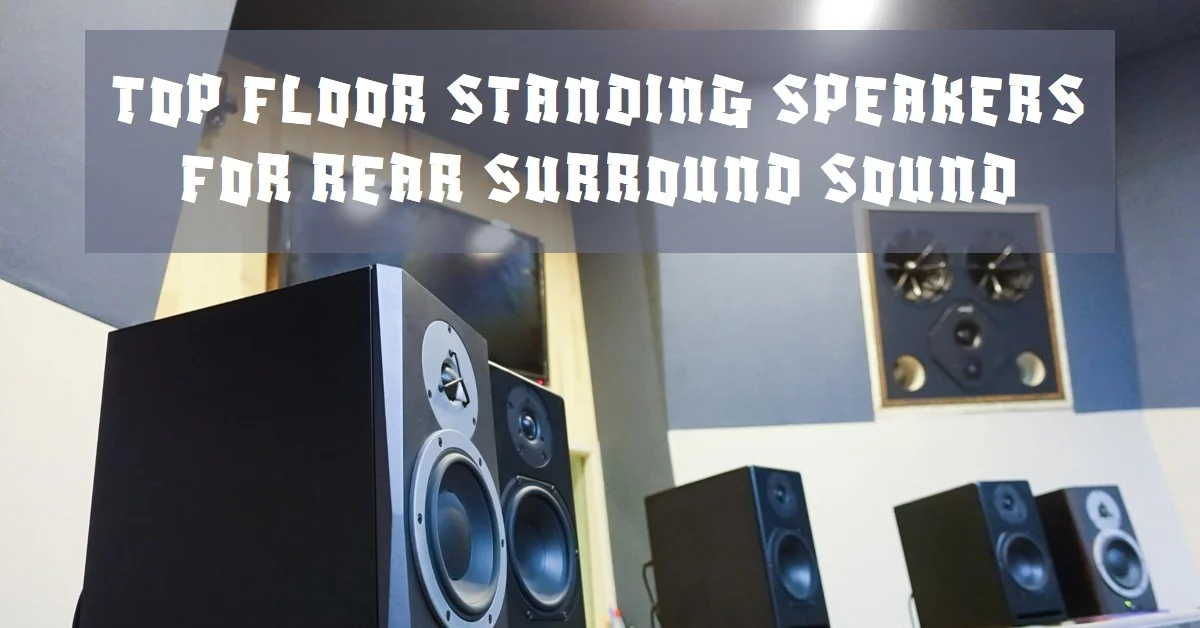
Most home theaters use small bookshelf or satellite speakers for the surround channels — but floor-standing speakers can work very well at the back of the room, especially in larger spaces or where wall mounting isn’t possible.
We’ve updated this guide with clearer placement advice and current speaker options. (The original’s “high-end” pick was a bookshelf speaker, and its budget pick’s availability is uncertain, so we’ve revised the recommendations.)
How we researched this: This guide is based on manufacturer specifications, owner documentation, published third-party measurements and professional reviews. We have not hands-on tested these speakers unless a section says so. Our methodology
Placement
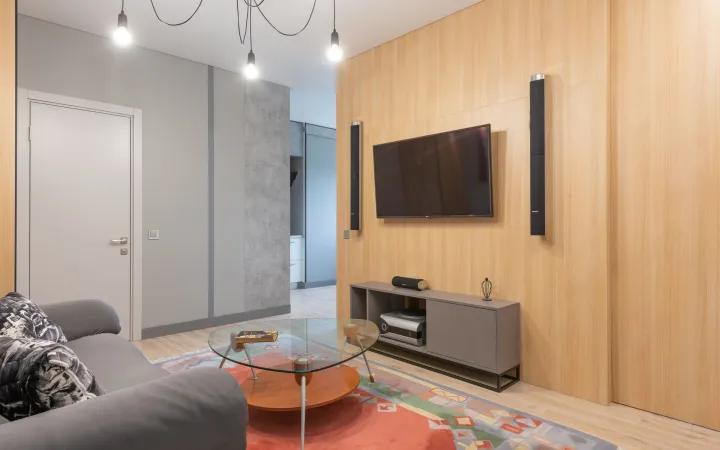
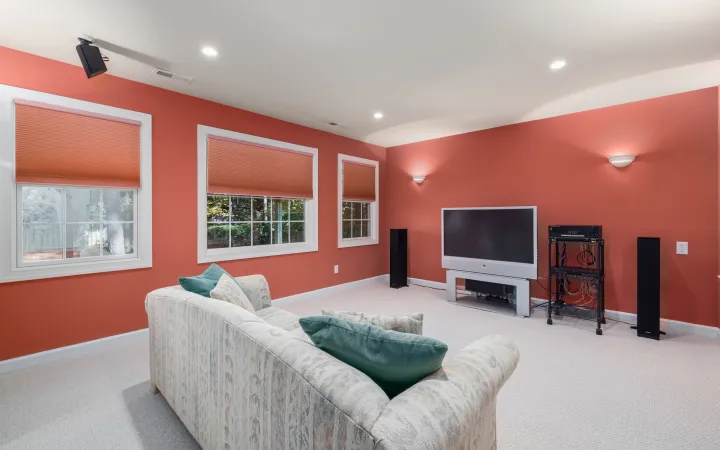
- 5.1 systems: surrounds go to the sides of the main seat, roughly 90–110° from the center line.
- 7.1 systems: side surrounds at 90–110°, rear surrounds behind the seating at about 135–150°.
- Height: tweeters at or slightly above seated ear height. Towers usually place tweeters near ear height already.
- Distance: keep them a couple of feet from the listeners to avoid one speaker dominating; your receiver’s room correction compensates for distance differences.
Specs that matter for surrounds
- Tonal match with your fronts — the most important factor, so effects pan smoothly around the room.
- Dispersion — wide dispersion helps create an enveloping sound field.
- Impedance and sensitivity similar to your fronts keeps your receiver’s job simple.
- Footprint — slim towers suit the sides and back of a room.
Good options
Polk Audio Monitor XT60
A slim, light entry-level tower that uses passive bass radiators instead of a port — an easy, affordable first step up from bookshelf speakers.
- Slim 7.5 in. wide cabinet is easy to fit
- Passive radiators instead of a port ease near-wall placement
- Wide 25–200 W amplifier range
- Design2-way passive
- Drivers1 in. Terylene dome tweeter, 1x 6.5 in. bi-laminate paper woofer, 2x 6.5 in. passive bass radiators
- Sensitivity86 dB (1W)
- Impedance4–8 Ω amp compatible
Wharfedale Diamond 12.3
A slim 7.1 in. wide 2.5-way tower with an easy 8-ohm-compatible load — a natural fit for smaller rooms and modest stereo amplifiers.
- Slim cabinet suits smaller rooms
- Easy load: 8 Ω compatible, 5 Ω minimum
- Response quoted ±3 dB (45 Hz–20 kHz)
- Design2.5-way passive
- Drivers1 in. (25 mm) textile dome tweeter, 5 in. (130 mm) mid/bass, 5 in. (130 mm) bass (Klarity PP cones)
- Sensitivity89 dB (2.83V)
- Impedance8 Ω nominal (5.0 Ω min)
Klipsch Reference R-600F
Klipsch’s horn-loaded tweeter and very high efficiency make this tower play loud on small amplifiers — a lively choice for movies.
- Very high efficiency (96 dB, in-room rating)
- Response quoted ±3 dB (38 Hz–21 kHz)
- 8 Ω — easy for any receiver
- Design2-way passive, horn tweeter
- Drivers1 in. aluminum LTS tweeter on 90x90 Tractrix horn, 2x 6.5 in. spun-copper TCP woofers
- Sensitivity96 dB (2.83V, in-room)
- Impedance8 Ω nominal
From our original list, Klipsch’s R-26FA has been replaced by newer Reference models such as the R-600F, which suits a Klipsch-based front stage.
Receiver setup
- Assign the towers as surround (or surround back) speakers.
- Set them to “Small” with an 80 Hz crossover if you have a subwoofer.
- Run room correction, then check levels with a test tone.
A 7.2-channel 8K receiver with Audyssey room correction and HEOS streaming — a capable hub for tower speakers in a home theater.
Rear surround speakers in 5.1, 7.1 and Atmos systems
In a 5.1 system, the two surround speakers handle both side and rear effects, so they’re usually placed slightly behind the main seat to the sides. In 7.1, a second pair — the surround backs — sits behind the listeners. Dolby Atmos adds height channels above. Floor-standing speakers work best as side surrounds in 5.1 or as surround backs in 7.1 when there’s floor space behind the seating.
Common mistakes
- Placing surrounds too close to a single seat, so one listener hears mostly that speaker.
- Mismatched tonal character, making effects change sound as they move around the room.
- Skipping calibration. Distance and level settings make a big difference to envelopment.
- Blocking walkways — towers need a safe, stable spot away from foot traffic.
Do rear speakers need to be towers?
No. Surround channels carry less bass than the fronts, especially when a subwoofer handles low frequencies, so bookshelf speakers or satellites are often perfectly adequate. Towers make sense when you can’t wall-mount, when you already own spare towers, or when you want extra headroom in a large room.
Frequently asked questions
Can I use tower speakers as surrounds?
Yes. They add weight to surround effects. Make sure they don’t block walkways and that their sound matches your fronts.
Should rear speakers be the same as the fronts?
Ideally from the same brand and series for a consistent tone. Exact matching is less critical than for the front three speakers.
How high should surround speakers be?
Tweeters at or slightly above seated ear height is a common guideline; Dolby suggests modest elevation for surrounds.
Related guides: Best tower speakers for home theater · Floor-standing vs satellites · Floor-standing vs bookshelf for home theater
Leave a Reply