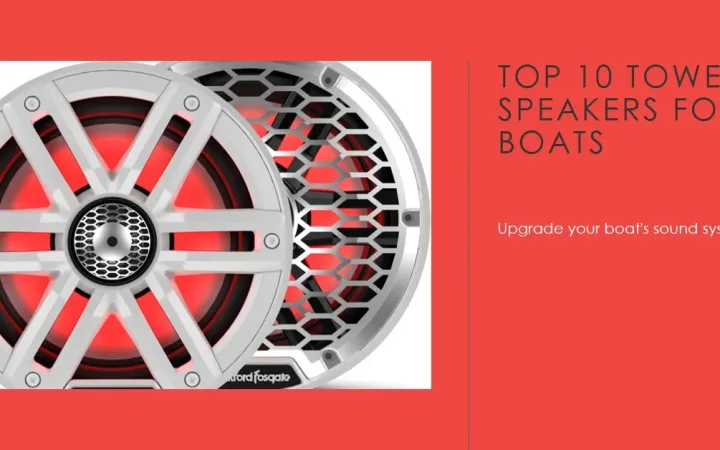
JL Audio and Wet Sounds are two of the best-known names in marine tower speakers — the weatherproof speaker pods that mount on a boat’s wakeboard tower and project sound behind the boat to riders and passengers. (These are different from home floor-standing “tower speakers”; an earlier version of this article mixed the two.)
We’ve rewritten this comparison to focus on what matters for boats, and removed listening claims we couldn’t substantiate.
What marine tower speakers are
- Enclosed speaker pods that mount to a wakeboard tower with clamps.
- Built to resist water, salt spray and UV (look for marine-rated construction).
- Usually powered by a dedicated marine amplifier for adequate volume over water and engine noise.
- Often include horn-loaded tweeters for long-throw output and RGB LED lighting.
How the brands compare
| JL Audio | Wet Sounds | |
|---|---|---|
| Focus | Broad marine audio range (speakers, subs, amps, sources) | Specialist in marine/tower audio |
| Typical sizes | Multiple pod sizes | Multiple pod sizes, including large high-output models |
| Lighting | RGB LED options on many models | RGB LED options on many models |
| Ecosystem | Match with JL marine amps/subs | Match with Wet Sounds amps |
Exact specifications vary by model and year — always confirm the current model’s driver size, power handling and clamp fit on the manufacturer’s site.
How to choose
- Tower and clamp fit: check your tower tube diameter and clamp options.
- Size and output: larger drivers and horn tweeters throw sound further behind the boat.
- Amplification: match RMS power handling to a marine amplifier; avoid running tower speakers from a head unit alone.
- Durability: UV-resistant enclosures, marine-grade hardware and sealed connections.
- Warranty and dealer support: professional installation is common.
Explore JL Audio marine tower speakers · Explore Wet Sounds tower speakers
Understanding marine durability ratings
Marine speakers are often described with IP ratings and marine test standards. An IP rating has two digits: the first for dust, the second for water. IPX5 means protection against water jets; IPX6 against powerful jets; IPX7 against temporary immersion. Some manufacturers also reference salt-fog and UV testing (for example ASTM standards), which indicate resistance to corrosion and sun damage — important for speakers mounted high on a tower in direct sunlight.
Amplifier matching
- Choose a marine amplifier with RMS output close to the speakers’ RMS rating.
- Check impedance: some tower speakers are 4-ohm and some 2-ohm capable amps can drive multiple pairs — follow the manufacturers’ guidance.
- Set gains carefully to avoid clipping, which damages tweeters.
- Install correctly sized power wire and fuses near the battery.
Tower pods vs coaxial marine speakers
Coaxial marine speakers flush-mount into panels around the boat for passengers. Tower pods are enclosed and aimed outward or aft for riders and open-water listening. Most wake boats use both: coaxials in the cockpit and two or more tower pods up high.
Frequently asked questions
Are JL Audio or Wet Sounds tower speakers for home use?
No — they’re designed for boats. For home audio, see our best tower speakers guide.
Do marine tower speakers need an amplifier?
Yes, in practice. Wake tower speakers need dedicated marine amplification to be heard clearly over water and engine noise.
Which is better, JL Audio or Wet Sounds?
Both are respected. Compare specific models for size, output, clamp fit, lighting and warranty, and consider which brand’s amps and subs you’ll pair them with.
Related guides: Best marine tower speakers · Kicker vs Wet Sounds · Tower speakers for boats
Leave a Reply