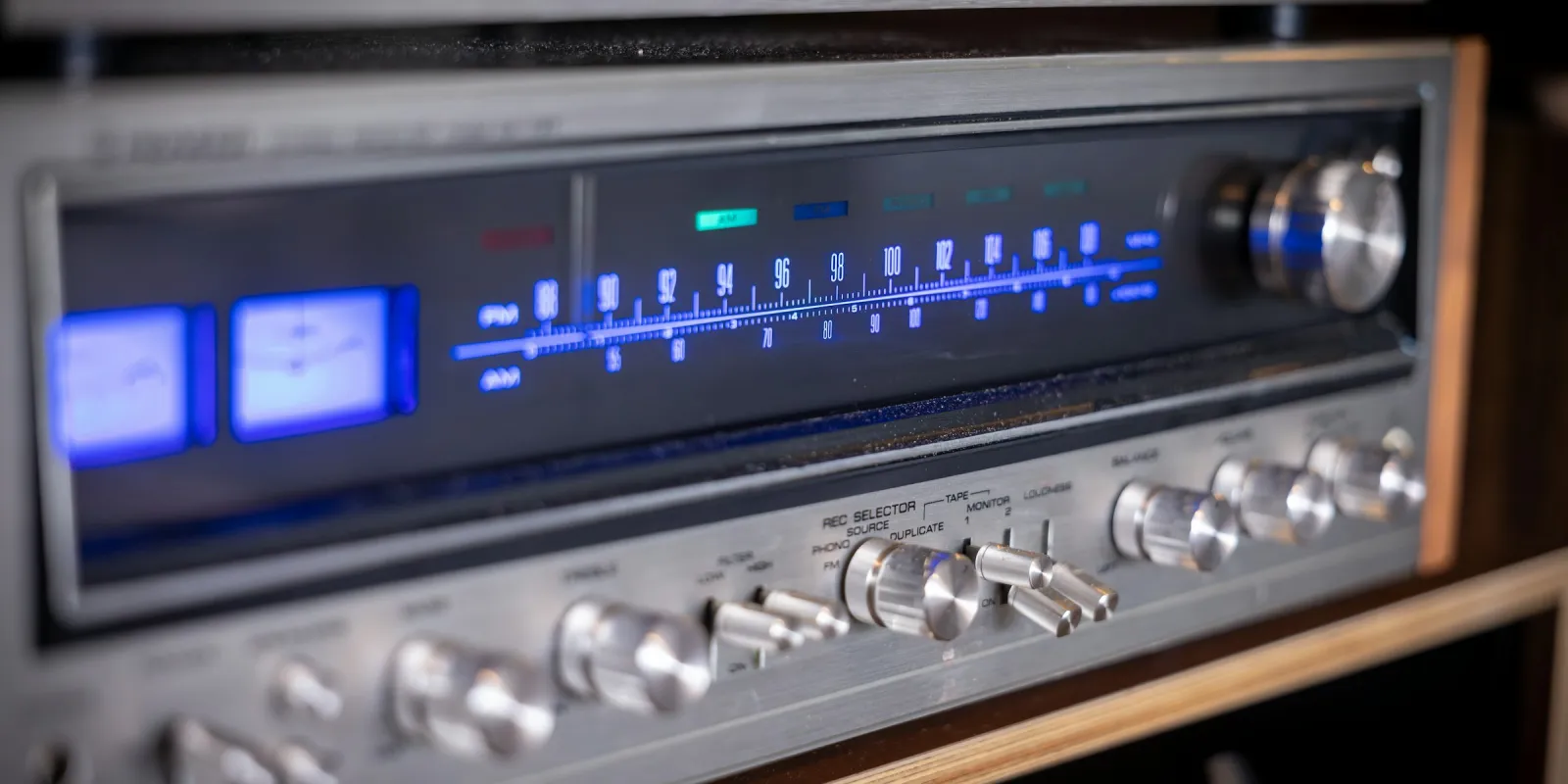
The Klipsch RP-280F was the flagship tower of Klipsch’s first Reference Premiere range — a big, efficient speaker built for people who want home theater dynamics and loud, lively music without a huge amplifier. It combined two 8-inch copper-colored Cerametallic woofers with Klipsch’s signature horn-loaded tweeter.
The RP-280F has since been discontinued. Klipsch’s later Reference Premiere generations — most recently the RP-8000F II — took its place. This updated review explains the RP-280F’s design, who it suits, and whether to buy one used or go for its successor.
How we researched this: This guide is based on manufacturer specifications, owner documentation, published third-party measurements and professional reviews. We have not hands-on tested these speakers unless a section says so. Our methodology
Design and features
- Dual 8-inch Cerametallic woofers. Klipsch’s spun ceramic-coated aluminum cones are light and stiff. Two 8-inch woofers give the RP-280F much more cone area than typical budget towers, which helps bass output and dynamics in larger rooms.
- Tractrix horn tweeter. A 1-inch titanium tweeter with Klipsch’s Linear Travel Suspension (LTS) sits in a horn with a round throat and square mouth. The horn controls dispersion and raises efficiency — it’s the core of the Klipsch sound.
- Tractrix port. A rear-firing port shaped to move air efficiently with less turbulence.
- High efficiency, 8-ohm load. Klipsch rated the RP-280F at around 98 dB sensitivity with an 8-ohm nominal impedance — very easy for almost any AV receiver to drive. (Klipsch typically quotes sensitivity using an in-room method, which reads higher than many brands’ anechoic figures, so don’t compare numbers directly across brands.)
What it’s like to live with (on paper)
The combination of horn tweeter and high efficiency is why Klipsch towers are popular for movies: they reach high volumes cleanly with little power and deliver strong dynamic contrast. Professional reviews of Klipsch’s Reference Premiere speakers commonly describe the presentation as lively and forward. Some listeners love that energy; others find it bright in a hard, echoey room. Room treatment — rugs, curtains, soft furnishings — and careful toe-in make a noticeable difference.
The rear port means the RP-280F needs some space from the wall behind it; pushing it right up against a wall typically makes bass boomy. Start at roughly 2–3 feet and adjust by ear — our placement guide can help.
Pros and cons
Pros
- Very efficient: plays loud on modest amplifiers.
- Dual 8-inch woofers give strong bass output for a passive tower.
- Dynamic, punchy presentation that suits home theater.
- Easy 8-ohm load.
Cons
- Discontinued — buying used means no warranty.
- Horn presentation can sound bright in reflective rooms.
- Rear port needs clearance from the wall.
- Large, heavy cabinet.
An earlier version of this review gave the RP-280F a star score. We’ve removed it because it wasn’t based on documented testing — see our review methodology.
Successor and alternatives
The RP-8000F II is the closest current equivalent: dual 8-inch Cerametallic woofers, an updated titanium horn tweeter and the same easy 8-ohm load. If you want the same character for less, the Reference-series R-800F is worth a look.
Klipsch RP-8000F II
Dual 8 in. Cerametallic woofers and Klipsch’s highest efficiency make this a natural pick for big rooms and dedicated theaters.
- Dual 8 in. woofers; 35 Hz (±3 dB)
- Very high efficiency for big rooms
- Atmos passthrough terminals
- Design2-way passive, horn tweeter
- Drivers1 in. titanium LTS vented tweeter on hybrid Tractrix horn, 2x 8 in. Cerametallic woofers
- Sensitivity98 dB (2.83V, in-room)
- Impedance8 Ω nominal
Klipsch Reference R-800F
The larger Reference tower adds dual 8 in. woofers for deeper bass (34 Hz ±3 dB) with the same easy 8-ohm, high-efficiency design.
- Dual 8 in. woofers
- Very easy to drive (98 dB in-room rating)
- 8 Ω load suits AV receivers
- Design2-way passive, horn tweeter
- Drivers1 in. aluminum LTS tweeter on 90x90 Tractrix horn, 2x 8 in. spun-copper TCP woofers
- Sensitivity98 dB (2.83V, in-room)
- Impedance8 Ω nominal
JBL Stage 280F
Dual 8 in. woofers, a waveguide tweeter and 91 dB sensitivity give the Stage 280F big-room output for movies at a mid-range price.
- Dual 8 in. woofers; 33 Hz (±6 dB)
- 91 dB sensitivity is easy to drive
- Atmos module binding posts
- Design2.5-way passive
- Drivers1 in. anodized aluminum tweeter in HDI waveguide, 2x 8 in. polycellulose ribbed-cone woofers
- Sensitivity91 dB (2.83V)
- Impedance6 Ω nominal
| Product | Design | Drivers | Frequency response | Sensitivity | Impedance | Dimensions | Sold as | Best for | Amazon |
|---|---|---|---|---|---|---|---|---|---|
| Klipsch RP-8000F II | 2-way passive, horn tweeter | 1 in. titanium LTS vented tweeter on hybrid Tractrix horn, 2x 8 in. Cerametallic woofers | 35 Hz–25 kHz +/- 3 dB | 98 dB (2.83V, in-room) | 8 Ω nominal | 43.1 × 10.84 × 18.25 in. (H×W×D) | Check listing | Best for Large Rooms | View |
| Klipsch Reference R-800F | 2-way passive, horn tweeter | 1 in. aluminum LTS tweeter on 90x90 Tractrix horn, 2x 8 in. spun-copper TCP woofers | 34 Hz–21 kHz +/- 3 dB | 98 dB (2.83V, in-room) | 8 Ω nominal | 43 × 10.9 × 17.5 in. (H×W×D) | Check listing | Home theater value | View |
| JBL Stage 280F | 2.5-way passive | 1 in. anodized aluminum tweeter in HDI waveguide, 2x 8 in. polycellulose ribbed-cone woofers | 33 Hz–25 kHz +/- 6 dB | 91 dB (2.83V) | 6 Ω nominal | 43.8 × 14.1 × 16.5 in. (H×W×D) | Single speaker | Best for Home Theater | View |
Specifications are manufacturer-published figures. Measurement methods differ between brands, so treat small differences with caution.
Frequently asked questions
Is the Klipsch RP-280F discontinued?
Yes. It was replaced by later Reference Premiere generations. Its closest current equivalent is the Klipsch RP-8000F II, which also uses dual 8-inch Cerametallic woofers and a horn-loaded tweeter.
Does the RP-280F need a powerful amplifier?
No. Its high efficiency means even modest AV receivers can drive it to loud levels. That’s one of the main reasons Klipsch towers are popular for home theater.
Is the RP-280F good for music?
It can be, especially for rock, live recordings and anything that benefits from dynamics. Some listeners find horn-loaded tweeters bright in hard-surfaced rooms; soft furnishings and adjusting toe-in can help.
How far from the wall should the RP-280F go?
Because it has a rear-firing port, start about 2–3 feet from the wall behind it, then move it in small steps. Closer placement increases bass but can make it boomy.
Verdict
The RP-280F remains a capable, very efficient tower and a good used buy for home theater in medium to large rooms — if the price is right and the drivers are undamaged. For a new purchase, the Klipsch RP-8000F II is the logical successor.
Related guides: Klipsch R-800F review · Polk vs Klipsch · Best tower speakers for home theater · Speaker sensitivity explained
Leave a Reply