The KEF Q750 and SVS Prime Tower were two of the most popular towers in the roughly $1,000-per-pair class: both from respected brands, both well reviewed, but built around different design ideas. This comparison has been expanded from our original short version, and updated now that KEF has replaced the Q750 with the Q7 Meta.
How we researched this: This guide is based on manufacturer specifications, owner documentation, published third-party measurements and professional reviews. We have not hands-on tested these speakers unless a section says so. Our methodology
Design philosophies
KEF Q750 (now Q7 Meta)
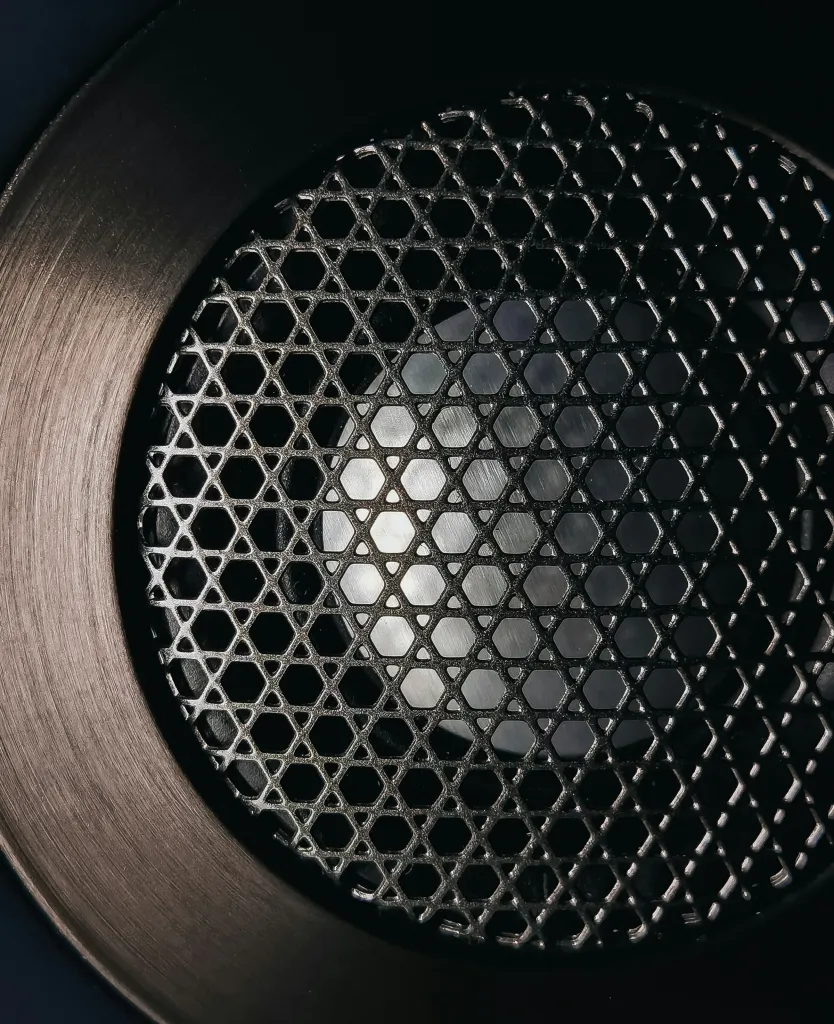
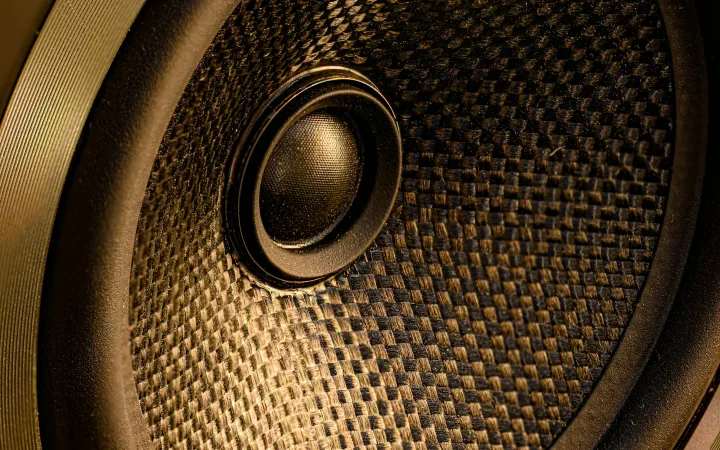
KEF’s Uni-Q driver places the tweeter at the center of the midrange cone so both radiate from one point. The benefit is consistent tonal balance across a wide listening area. The Q750 supported the Uni-Q with additional bass drivers and auxiliary bass radiators. Its successor, the Q7 Meta, adds Metamaterial Absorption Technology (MAT) behind the tweeter and is a 4-ohm design (3.2 Ω minimum).
SVS Prime Tower
The Prime Tower is a conventional 3-way: a 1-inch aluminum dome tweeter, a 4.5-inch midrange and dual 6.5-inch woofers in a ported cabinet. SVS is best known for subwoofers, and the Prime series was designed to integrate easily with them.
Specification comparison
| KEF Q750 | KEF Q7 Meta (current) | SVS Prime Tower | |
|---|---|---|---|
| Design | Uni-Q based, bass reflex/ABRs | 3-way, Uni-Q with MAT | 3-way, ported |
| Key drivers | 5.25 in. Uni-Q + bass units | Uni-Q (0.75 in. tweeter + 4 in. mid), 2 × 6.5 in. bass | 1 in. tweeter, 4.5 in. mid, 2 × 6.5 in. woofers |
| Impedance | — | 4 Ω (3.2 Ω min) | Check SVS spec sheet |
| Status | Discontinued | Current | Still offered by retailers |
Q7 Meta specs from KEF. We list only figures we’ve verified.
Which suits whom?
- Choose KEF if imaging and a wide sweet spot matter most, or if listeners sit off-center (sofas, family rooms).
- Choose SVS if you want a classic 3-way, plan to add an SVS subwoofer, or prefer a straightforward load for your receiver.
- Either works well for music and home theater in medium rooms.
Current options
KEF Q7 Meta
KEF’s Uni-Q point-source driver with Metamaterial Absorption Technology aims for precise imaging; a port bung helps in smaller rooms.
- Design3-way passive
- DriversUni-Q array (0.75 in. vented aluminum dome tweeter with MAT + 4 in. aluminum midrange cone), 2x 6.5 in. hybrid aluminum bass cones
- Frequency response46 Hz–20 kHz +/- 3 dB (39 Hz–20 kHz at -6 dB)
- Sensitivity87 dB (2.83V)
- Impedance4 Ω nominal (3.2 Ω min)
- Amp power15-200 W
- Dimensions39.4 × 12.5 × 12.4 in. (H×W×D)
- Weight40.6 lb
Advantages
- Uni-Q coincident driver for even dispersion
- Response quoted ±3 dB (46 Hz–20 kHz)
- Port bung included for near-wall use
Limitations
- 4 Ω nominal (3.2 Ω min) needs a capable amp
- 87 dB sensitivity is average
- Sold individually
SVS Prime Tower: check current availability. Pair it with an SVS sub such as:
A compact sealed 12 in. subwoofer with a 325 W RMS amplifier and app control — tidy and tight-sounding in smaller rooms.
Placement differences
Both designs are ported, so give them some space from the wall behind — start at roughly 2 feet. KEF supplies port bungs with its Q Meta speakers to reduce bass when space is tight. KEF’s Uni-Q tends to be forgiving of off-center seating, while a conventional 3-way like the Prime Tower benefits from careful toe-in toward the main seat.
Building a system around each
- KEF route: pair the Q7 Meta with a KEF Q Meta center channel for consistent dialogue, and a subwoofer for movies.
- SVS route: pair the Prime Tower with an SVS Prime center and an SVS subwoofer; SVS designed the range to integrate.
- Amplifier: the KEF’s 4-ohm load benefits from a receiver or amp rated for 4 ohms.
Frequently asked questions
Is the KEF Q750 discontinued?
Yes. KEF’s current Q Meta range replaced it; the Q7 Meta is the closest equivalent.
Is the SVS Prime Tower a 3-way speaker?
Yes — a 1-inch tweeter, 4.5-inch midrange and two 6.5-inch woofers.
Which is easier to drive?
The KEF Q7 Meta’s 4-ohm load (3.2 Ω minimum) needs an amplifier comfortable with low impedance. Check any pairing with our compatibility checker.
Related guides: SVS Prime Tower review · KEF Q500 review · Best 3-way speakers
Leave a Reply